Loading...
Serving Cedar City, UT and surrounding areas. (435) 592-8002
Cedar City homes built before 1995 lose heat and cool air through thin, outdated insulation every day. We upgrade your attic and walls without tearing anything out, using the correct sequence: seal the gaps first, then insulate.
Retrofit insulation in Cedar City means adding insulation to a home that is already built - without tearing out walls or doing a major renovation - and most projects are completed in one to three days with no need to leave your home. Contractors blow, spray, or inject insulating material into existing spaces like attics, wall cavities, and crawl spaces through small access points. The goal is to close the gaps that are costing you money on every heating and cooling bill, month after month.
A large share of Cedar City's housing was built in the 1960s through the early 1990s, before modern energy codes required insulation levels that are standard today. Those homes were built to meet the code of their time, not the climate demands your home faces over a full year. Cedar City sits at nearly 5,800 feet in IECC Climate Zone 5, with winter lows that regularly reach the teens and summer highs in the upper 90s. Under-insulated homes in this climate do not just feel uncomfortable - they run up heating and cooling bills that compound every month you wait.
Retrofit insulation should always start with air sealing. Adding insulation on top of unsealed gaps covers the problem without solving it. We pair retrofit work with spray foam insulation for rim joists and tight spots, and with broader home insulation assessments when homeowners want to address the full building envelope in a single project.
Cedar City winters are genuinely cold, with overnight lows regularly dropping into the teens and single digits from December through February. If your gas or electric bill climbs dramatically each winter - especially compared to neighbors with similar-sized homes - heat is escaping through your ceiling and walls. Well-insulated homes hold temperature steadily, so the furnace does not run as often or as long.
Walk through your home on a cold January morning or hot August afternoon. If one or two rooms feel dramatically different from the rest - especially rooms on the top floor, over a garage, or on an exterior corner - insulation in those areas is thin or missing. This is one of the most reliable things you can observe yourself without any equipment or testing.
Homes built in Cedar City before roughly 1995 were constructed under older energy codes that allowed much thinner insulation than what is recommended today. If your home is in that age range and insulation has never been added, you are almost certainly under-insulated by current standards. The age of the home alone is a strong enough reason to have it checked.
Thick ridges of ice building up along the edge of your roof are a classic sign of heat escaping through an under-insulated attic. Escaping heat warms the roof deck, melts snow near the peak, and that water refreezes at the cold eaves - sometimes backing up under shingles and causing leaks. Cedar City gets enough winter precipitation and cold snaps for this to be a real concern in older homes.
For most Cedar City homes, the attic is the highest-priority retrofit target. It is the single biggest source of heat loss in winter and heat gain in summer, and it is the least disruptive area to insulate because the crew enters through your existing attic hatch and blows material in without touching your ceilings or walls. The Department of Energy recommends that attics in Cedar City reach R-38 to R-60, which translates to roughly 10 to 19 inches of blown insulation depending on the material used. For homes with visible joists or just a thin layer of original batts, that gap is often significant.
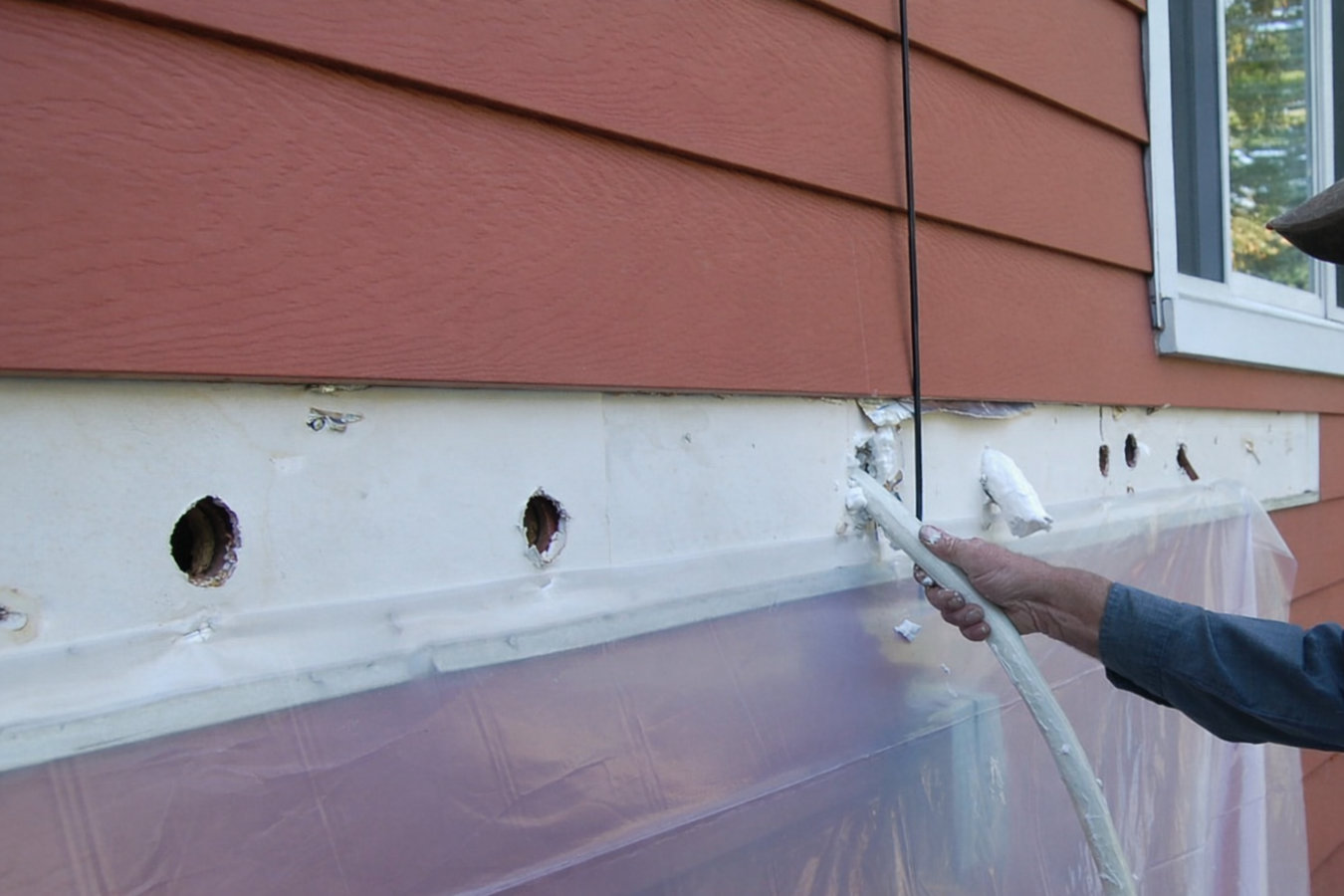
Wall insulation requires a different process - small holes are drilled, material is blown in, and holes are patched the same day - but the comfort improvement in drafty rooms is often the change homeowners notice most immediately. Rim joist insulation using spray foam insulation is one of the most cost-effective retrofit applications in Cedar City homes, targeting the gap where cold outside air enters right at floor level. For homeowners who want to see the full picture before deciding where to start, a home insulation assessment covers every part of the building envelope and helps prioritize the work by return on investment. The DOE insulation guide and the North American Insulation Manufacturers Association both recommend starting any retrofit with an air seal step before adding insulating material.
Best for most Cedar City homes - fast to install, works with existing framing, and brings older attics up to Climate Zone 5 depth standards.
Suited for homes with little or no wall insulation where drilling and patching is preferable to tearing out drywall.
Ideal for the gap where your foundation meets your floor framing - one of the most cost-effective retrofit applications in Cedar City homes.
The highest-return option for Cedar City homes built before 1995 - addresses both the thermal and air-leakage sides of the energy problem in one project.
Cedar City is in IECC Climate Zone 5, which means the building code requires meaningful insulation levels in new construction. But a large share of Cedar City homes were built long before those requirements existed, and many have never had a contractor measure what is actually in their attic or walls. Homes built in the 1970s and 1980s in neighborhoods near Southern Utah University and downtown Cedar City often have the original batts - thin fiberglass that has compressed over the decades and now performs well below its original rating. In Cedar City's climate, where your heating system runs from October through April and your cooling system runs from June through September, the cost of that gap shows up on your utility bill every single month.
Cedar City's dry, high-desert climate also affects which insulation materials last longest. Low humidity reduces the risk of moisture-related degradation inside wall cavities, which is an advantage for blown-in cellulose and fiberglass. Homeowners in Parowan and across the Cedar City service area face the same Climate Zone 5 performance requirements, and the same pre-1995 housing stock gap. Rocky Mountain Power Wattsmart rebates and the federal 30 percent tax credit are available to homeowners across the region - a combination that can significantly reduce the net cost of a retrofit project.
When you reach out, we ask about your home age, what areas you are concerned about, and any comfort problems you have noticed. We respond within 1 business day to schedule an in-home visit, and most Cedar City contractors can get to you within a few days to a week.
We walk through your home and inspect the areas most likely to need attention - typically starting with the attic. We measure what insulation is already there, check for air leaks around fixtures and penetrations, and look at any crawl space or basement areas. The visit takes 30 to 60 minutes and ends with a plain-language explanation of what we found.
You receive a written estimate that specifies what work is recommended, what materials will be used, and the total cost. Ask whether air sealing is included - if it is not, ask why. We also walk you through the federal tax credit and Rocky Mountain Power rebate options that apply to your project.
The crew air-seals gaps first, then blows insulation to the correct depth. Any holes drilled for wall insulation are patched before the crew leaves. You receive all documentation needed to claim your tax credit and utility rebate - keep that paperwork somewhere safe.
Free in-home assessment. Written estimate before any work starts. No pressure to decide on the spot.
(435) 592-8002The most common shortcut in the industry is piling insulation on top of unsealed gaps. It looks like more work was done, but it buries the problem. We seal every gap we find before any insulating material goes in, because that sequence is the only one that actually works.
A large share of Cedar City homes were built in the 1970s through the early 1990s - before modern energy codes required adequate insulation levels. We work on these homes regularly and understand the construction patterns, the common failure points, and what it takes to bring them up to current performance standards.
The federal 30 percent tax credit and Rocky Mountain Power Wattsmart rebates can take a real chunk off your total cost. We handle the paperwork as part of the job so you have everything you need to file both claims. You should not have to become an expert in utility programs just to get money back on work that saves energy.
We have worked on homes throughout Cedar City - older neighborhoods near Southern Utah University, established streets near downtown, and newer subdivisions on the north and west sides of town. We know what to expect across the range of homes here and price our work honestly based on what we find.
Retrofit insulation is one of the few home improvements that pays you back every month through lower utility bills. We do the work right so those savings start on your first bill after installation and continue for as long as you own the home.
Spray foam is the retrofit material of choice for rim joists, tight crawl spaces, and hard-to-reach areas where blown insulation cannot go.
Learn moreA whole-home insulation assessment starts with understanding where heat is escaping across every part of the building envelope.
Learn moreFall slots fill fast - lock in your installation date before the first hard freeze and your heating bills climb again.