
Loading...
Serving Cedar City, UT and surrounding areas. (435) 592-8002
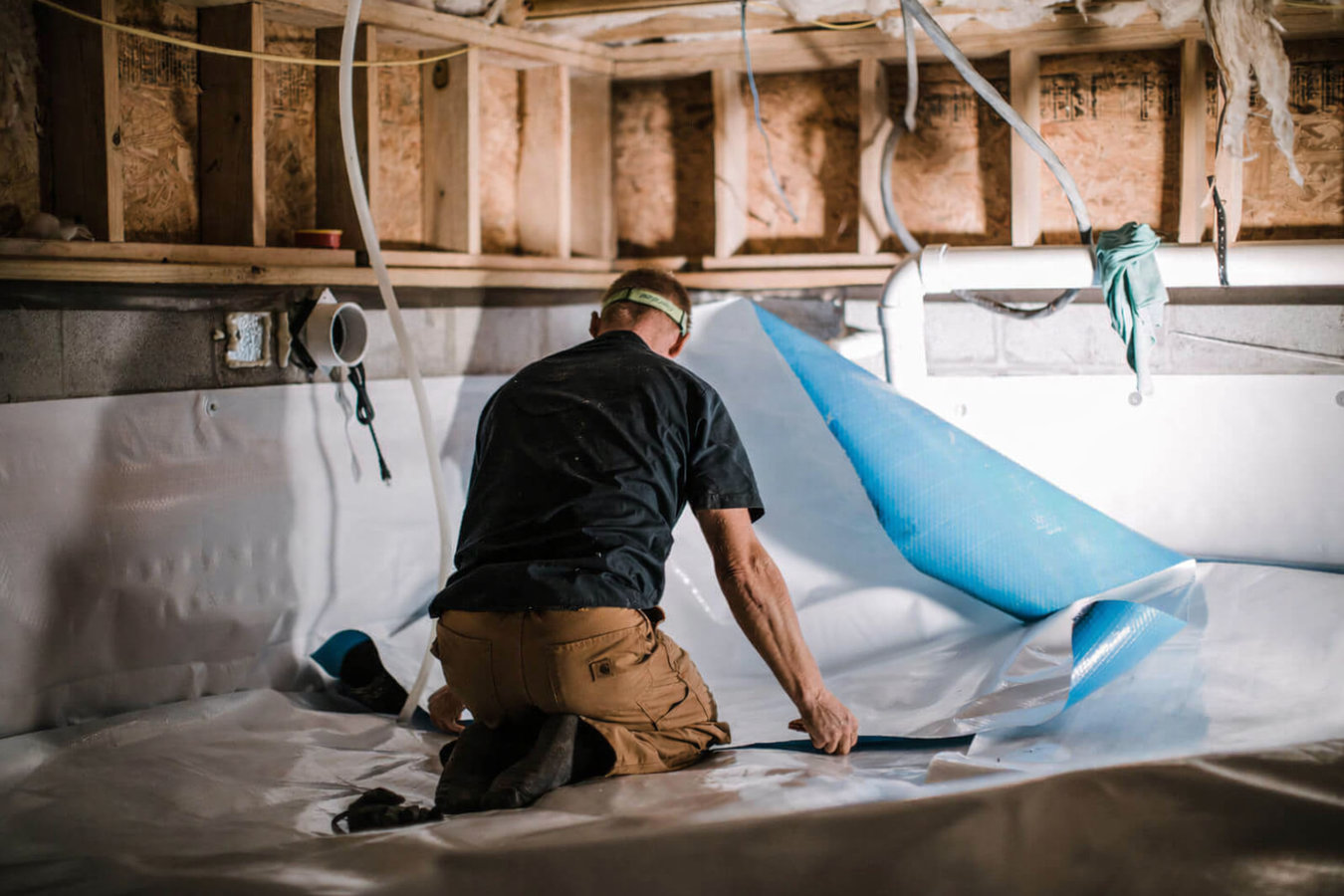
Ground moisture from Cedar City snowmelt and clay-heavy soil quietly attacks crawl spaces for years before homeowners notice. A properly installed vapor barrier stops it at the source.
A crawl space vapor barrier in Cedar City is a heavy plastic sheet laid across your crawl space floor to block ground moisture from rising into your home - most installations are completed in one to two days.
Many Cedar City homeowners assume that because the region feels dry, moisture under the house is not a real concern. That assumption is wrong. Cedar City sits at nearly 5,800 feet, and snowmelt from the surrounding mountains pushes water into the soil around foundations every spring. The clay-heavy soils in Iron County hold that water for weeks and direct it upward into crawl spaces. Without a barrier, that moisture works silently into your floor framing, insulation, and eventually your air. If you have noticed musty smells in the house, cold floors in winter, or just know your home was built before 2000 and has never been checked, a crawl space vapor barrier is one of the most cost-effective ways to protect the structure underneath you. If your crawl space also needs thermal protection, our crawl space insulation service handles both in a single visit.
The U.S. Department of Energy and Building Science Corporation both identify crawl space moisture control as a foundational step in home performance - not an optional upgrade. In Cedar City's climate, where temperature swings between seasons are some of the most extreme in Utah, this baseline protection is especially important.
If your floors feel unusually cold during Cedar City's long winters, or if certain spots feel slightly spongy underfoot, moisture may be working on the wood below. At nearly 5,800 feet elevation, cold floors can indicate poor insulation, but softness or bounce is a warning sign that the floor framing has been absorbing moisture over time.
Cedar City gets meaningful snowfall, and when it melts in late winter and early spring, water soaks into the ground around your foundation. If you notice a musty or earthy smell in your home during March or April, or after a heavy rain, that odor is almost always coming from below. It means moisture has been in your crawl space long enough for mold or mildew to start growing.
If you have ever looked into your crawl space and seen plastic that is ripped, bunched up, or covered in white or black spots, that barrier is no longer working. Old plastic degrades in Cedar City's wide temperature swings. A damaged barrier can actually trap moisture against the wood rather than directing it away - making the problem worse than no barrier at all.
Many Cedar City homes built in the 1970s, 1980s, and 1990s either have no vapor barrier or have one installed to a much lower standard than what is used today. If you have owned your home for years and no one has ever looked under it, there is a reasonable chance the crawl space needs attention - especially if the home is in an older neighborhood near the center of town.
Cedar City Insulation installs both basic vapor barriers and full crawl space encapsulation systems. A basic barrier covers the entire dirt floor with heavy polyethylene sheeting - typically 10-mil or 20-mil - with all seams overlapped and taped and the material run up the foundation walls. This approach is right for most Cedar City homes and stops the ground moisture cycle that causes musty smells and floor framing damage. For the full range of moisture and thermal protection in one project, we also offer full encapsulation paired with our vapor barrier installation service, which extends coverage to the walls and can include dehumidifier integration.
Every project starts with a thorough look at what is already there. Homes that were built before 2000 often have thin or degraded plastic that needs to come out before new material goes in. Leaving failed material in place traps moisture against the wood instead of blocking it. We remove the old barrier as part of the job so the new installation starts from a clean surface.
Best for homes with no existing moisture damage and a crawl space that mainly needs ground vapor blocked before it reaches the framing.
Right for homes that have had standing water, persistent dampness, or where full sealing of the walls and vents provides a more complete solution.
For homes where old, degraded, or failed plastic is already in place - removing it completely before the new barrier goes in ensures the job is done right.
For crawl spaces with high humidity or active moisture problems - the barrier blocks ground vapor and the dehumidifier manages residual air moisture year-round.
Cedar City gets about 30 inches of snow in an average winter, and when that snow melts in late February and March, the water has to go somewhere. The clay-heavy soils in Iron County do not drain quickly - they hold moisture and push it toward foundations and under crawl spaces for weeks after the snow is gone. This is Cedar City's single most common cause of vapor barrier failure in older homes. The homes most at risk are the ones built during the city's fastest growth period, from the 1970s through the 1990s, when crawl space moisture protection was minimal or absent in many residential builds. Neighborhoods near the older downtown core and near Southern Utah University have a higher concentration of these homes. If you are in Parowan or nearby Iron County communities, many of these same conditions apply.
The freeze-thaw cycle here is also harder on vapor barriers than homeowners realize. Cedar City's temperature swings - from summer highs above 95 degrees to winter lows below 10 - cause the ground to expand and contract through the seasons. Thin plastic cracks and pulls away from walls under that movement. This is why the thickness of the material matters so much in this climate, and why a properly installed 10-mil or 20-mil barrier significantly outlasts builder-grade sheeting. For homeowners in Richfield and other high-elevation communities we serve, these same temperature-driven demands apply. You can read more about the science of moisture control at the U.S. Department of Energy.
You reach out by phone or the online form and we respond within one business day to schedule a visit. There is no cost to get a professional look at your crawl space before you commit to anything.
A crew member enters your crawl space through the floor hatch or exterior access panel and spends 20 to 45 minutes checking the size, the condition of any existing plastic, and whether there is standing water or visible mold. You get a written estimate and a plain-language explanation of what we found.
Clear the access hatch area so the crew can move in and out easily. If you store anything in the crawl space, move it out beforehand. The contractor handles removing any old failed plastic that is already down there.
The crew lays heavy plastic sheeting across the entire dirt floor, overlaps each section, tapes the seams, and runs the material up the foundation walls. Most jobs take one to two days. Before leaving, we walk you through photos of the completed work so you can see every seam and corner.
Free estimates, no obligation. We respond within one business day and explain exactly what your crawl space needs before any work starts.
(435) 592-8002We install 10-mil to 20-mil polyethylene sheeting - the thicker plastic that holds up through Cedar City's freeze-thaw cycles without cracking or pulling away from walls. Thin, builder-grade plastic is a short-term fix that the local climate will defeat within a few years.
Every seam on a properly installed barrier needs to overlap by at least 12 inches and be taped with foil or crawl space tape. We do not skip this step. Untaped seams are where moisture finds its way through, and in Cedar City's wet spring season, that gap matters.
We work across Cedar City and the surrounding Iron County area every week. We know which older neighborhoods near downtown have the most moisture issues, and we know what Cedar City's clay-heavy soils do to crawl spaces over time. That local knowledge shows up in how we diagnose and solve your specific situation.
When a project requires a permit from Iron County, we handle it, so it does not show up as an issue at resale. We also document the finished barrier with photos, giving you a clear record of exactly what was installed.
Every vapor barrier installation we do is photographed and walked through with the homeowner before we leave. Cedar City is where we work every day, and our reputation here depends on delivering results you can see and verify.
Full vapor barrier installation across your crawl space floor, walls, and seams for comprehensive moisture control throughout your home.
Learn morePair your vapor barrier with floor-joist insulation or full encapsulation to address both moisture and heat loss in the same crawl space project.
Learn moreSpring snowmelt is the hardest time of year on unprotected crawl spaces. Call us today or submit the form and we will have an estimate to you within one business day.