
Loading...
Serving Cedar City, UT and surrounding areas. (435) 592-8002
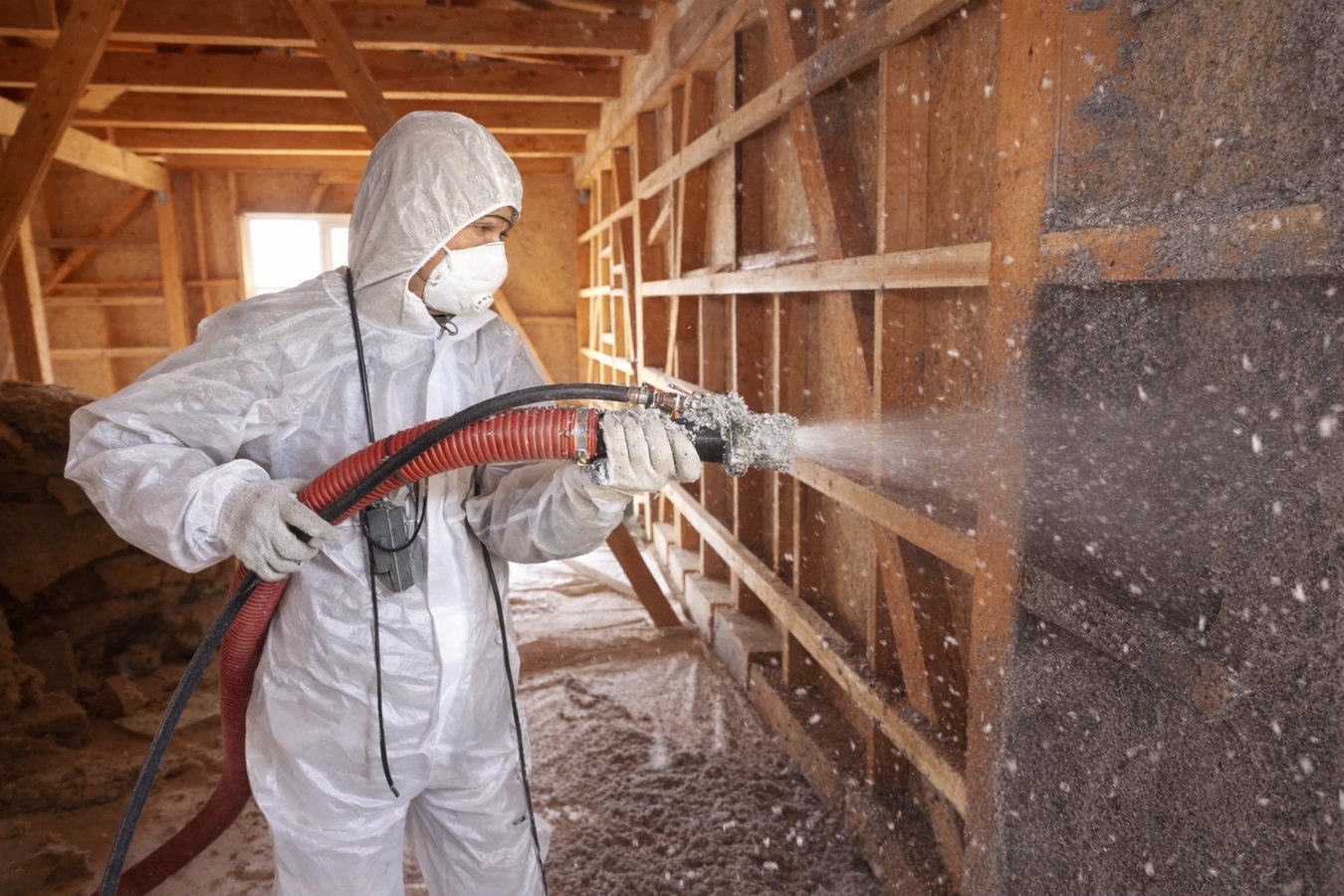
Cedar City Insulation serves Mesquite, NV homeowners with home insulation, attic insulation, spray foam, and air sealing built for a desert valley that regularly sees summer highs above 110 degrees - conditions that push standard insulation to its limits and make the right installation critical.
We have been completing insulation projects in Mesquite since 2023, working across the stucco and concrete block homes throughout the Virgin River Valley - and we reply to every new inquiry within one business day.
Most Mesquite homes were built in the 1990s and 2000s to standards that made sense at the time but fall short of what is needed when summer temperatures regularly hit 110 degrees and your air conditioner runs for months without a break. A whole-home insulation assessment covers the attic, walls, and any crawl space - the three places where heat gain and air leakage compound each other most in a desert climate. Learn more about our home insulation service and how it applies to Mesquite properties.
Mesquite attics reach extreme temperatures in summer - easily 150 degrees or more on a July afternoon - and that heat transfers directly through an under-insulated ceiling into the living space below. Even homes built in the last 20 years may not have enough attic depth to handle Mesquite's sustained high temperatures, especially if the insulation has settled or been disturbed by HVAC work. Bringing the attic up to the correct depth is the single most cost-effective cooling upgrade available to most Mesquite homeowners.
Mesquite's stucco and concrete block homes expand and contract with the extreme day-night temperature swings that are normal in the Virgin River Valley, and that movement opens small gaps over time around window frames, utility penetrations, and the rim joist. Spray foam closes those infiltration points permanently - the gaps that let 110-degree air work its way into a supposedly sealed home all summer. For part-time residents and snowbirds who leave the home empty through the hottest months, spray foam provides airtight performance that does not degrade while the house sits unoccupied.
In Mesquite's extreme heat, even a small air leak matters more than it would in a moderate climate - a gap that admits 110-degree outside air puts a direct load on the air conditioner that insulation alone cannot fix. Air sealing before adding attic insulation closes the penetrations around light fixtures, pipes, and framing that would otherwise let hot air bypass the insulation above them. Mesquite homes that were built with standard caulk and sealants in the 1990s often need those sealants re-evaluated because the desert heat has dried and cracked them over time.
Mesquite sits in the Virgin River Valley on desert soils that include patches of caliche and expansive clay - soil types that move as moisture levels change, particularly after monsoon storms in July and August. A vapor barrier in the crawl space prevents ground moisture from working its way up into the floor structure during and after those storm events, which protects floor framing, subfloor materials, and any insulation installed above the barrier. For homes with concrete slab foundations, vapor barrier work focuses instead on any partially conditioned spaces beneath additions or utility rooms.
Closed-cell foam delivers more insulating value per inch than any other residential insulation product, which makes it well-suited to Mesquite homes where attic space is limited or where the highest thermal resistance is needed in a thin profile. The product is also a moisture barrier, which adds value in areas where monsoon rain can drive moisture against the building envelope. For Mesquite HOA communities where exterior work is subject to board approval, closed-cell foam applied to interior-facing surfaces achieves high performance without changing the exterior appearance of the home at all.
Mesquite sits at about 1,600 feet elevation in the Virgin River Valley in northeast Nevada - a low desert environment with a climate that is significantly hotter than most of the places its residents originally came from. Summer highs regularly reach 110 to 115 degrees Fahrenheit from May through September, and nighttime temperatures in winter drop below freezing often enough to create a meaningful freeze-thaw cycle even at this low elevation. That combination - extreme summer heat, colder-than-expected winter nights, and a wide daily temperature swing year-round - puts the building envelope of every Mesquite home under sustained stress. Stucco and concrete block, the dominant exterior materials throughout the city, handle the dry heat reasonably well on the surface but crack at joints and penetrations as the structure expands and contracts with those temperature swings, creating air infiltration paths that compound insulation losses.
The housing stock adds a specific layer of context. Almost all of Mesquite was built after 1990, which means the homes are relatively new - but new does not necessarily mean well-insulated for this level of heat. Energy codes from the 1990s and 2000s set minimum standards that were acceptable at the time, and many builders built to those minimums rather than exceeding them. A large share of Mesquite's homeowners are retirees or part-time residents who leave the home empty through the summer, which means insulation failures accumulate unnoticed for months. The desert soils under Mesquite - including caliche layers and clay patches that swell and shrink with moisture - move under slabs and foundations over time, which can disturb ductwork, disrupt crawl space vapor barriers, and shift insulation out of place in ways that are not visible without an inspection.
Our crew has been completing insulation projects in Mesquite since 2023, working on homes throughout the Virgin River Valley - from the subdivisions along the main corridors to the golf course communities on the edges of town. We are familiar with the stucco and concrete block construction that dominates the area, the HOA requirements in planned communities like those near Falcon Ridge, and the patterns of deferred maintenance that show up on part-time properties that sit empty through the summer. Mesquite is roughly 35 miles from St. George, Utah, and we coordinate our scheduling across that corridor so Mesquite homeowners get reliable availability without waiting weeks.
The city sits in a narrow valley hemmed in by red rock terrain, and most residential development runs along the valley floor in a relatively compact pattern. The older streets closer to downtown Mesquite tend to have homes from the 1990s and early 2000s, while newer subdivisions have expanded onto the hillsides and benchlands around the valley edges. The Virgin River defines the eastern edge of the city, and homes in the lower-lying neighborhoods near the river have dealt with monsoon flooding and moisture issues that properties on higher ground do not face in the same way.
We also serve the neighboring community of Boulder City, NV - about 80 miles southwest on Interstate 15 near Lake Mead, a Nevada community with its own distinct housing stock and climate profile that also benefits from properly calibrated desert insulation. Homeowners in both cities share the challenge of extreme Nevada heat and benefit from a contractor who has worked in both environments rather than applying a one-size-fits-all approach from a cooler climate.
We reply to all Mesquite inquiries within one business day. The first conversation is brief - we ask about your home type, what you have noticed, and whether it is an owner-occupied or part-time property. No obligation, no pressure.
We visit your Mesquite home and walk through the attic, any crawl space, and the areas you have flagged. The assessment takes 30 to 60 minutes and accounts for the type of construction - stucco, block, or frame - and whether the home is part-time occupied. You receive a written estimate before any work is booked, so pricing is clear from the start.
Our crew arrives with all equipment and completes most Mesquite attic and home insulation jobs in a single day. We seal air leaks first, then install insulation in sequence. For part-time residents scheduling from out of state, we coordinate the visit and keep you updated throughout so you do not need to be on-site.
Before we leave, we document what was installed - type, depth, and location - and walk through the completed work with whoever is on-site. Keep this paperwork to claim the federal energy efficiency tax credit if the materials qualify, and to have a clear record when you eventually sell the home.
We serve Mesquite, NV homeowners and part-time residents with free on-site estimates and no-pressure quotes. Most projects are completed in a single day. Call or submit a request and we reply within one business day.
(435) 592-8002Mesquite is a city of roughly 20,000 residents in Clark County, Nevada, situated in the far northeast corner of the state on the Utah border. Mesquite sits in the Virgin River Valley at about 1,600 feet elevation, hemmed in by red rock terrain on multiple sides. The city is closer in character and distance to St. George, Utah - about 35 miles to the northeast - than it is to Las Vegas, which sits roughly 80 miles to the southwest. That proximity to southern Utah means many Mesquite homeowners already use Utah-based contractors for home services, and the cross-border relationship is well-established. The city has grown rapidly over the past two decades, roughly doubling in size since 2000, as retirees, snowbirds, and golf enthusiasts have been drawn to its warm winters, lower cost of living compared to Las Vegas, and courses like Falcon Ridge that helped build Mesquite's reputation as a desert golf destination.
The residential character of Mesquite is defined by single-family homes on modest lots with desert landscaping - gravel, rock, and drought-tolerant plants rather than grass lawns. A significant portion of homes sit inside planned HOA communities with consistent exterior finishes and shared common areas. Many properties are seasonally occupied, with owners departing for cooler climates during the intense summer months and returning in the fall. That part-time occupancy pattern means deferred maintenance is common, and insulation is one of the items that often goes unevaluated for years. Neighboring communities we serve include Boulder City, NV to the southwest and Ivins, UT across the border - both desert communities with their own distinct building stock and climate profiles that we work in regularly.
High-performance spray foam that seals and insulates in one application.
Learn moreKeep heat in during winter and out during summer with proper attic insulation.
Learn moreLoose-fill insulation blown into walls, attics, and hard-to-reach spaces.
Learn moreProtect your floors and pipes with professional crawl space insulation.
Learn moreDense, rigid closed-cell foam offering maximum R-value and moisture resistance.
Learn moreFlexible open-cell foam ideal for interior walls and soundproofing.
Learn moreCommercial-grade insulation for offices, warehouses, and retail buildings.
Learn morePrevent ground moisture from entering your home with a vapor barrier.
Learn moreProfessional vapor barrier installation for walls, floors, and crawl spaces.
Learn moreServing these cities and communities.
Mesquite summers hit 110 degrees and your cooling bill reflects every gap in the insulation - call now and we will assess your home before the next heat season arrives.